Understanding Dilutions and Potencies If you have ever picked up a small vial containing homeopathic pellets and thought to yourself 'What the heck is in here?'! then I am glad you are asking the right question. Homeopathy is one of the world's most widely used forms of natural (as opposed to pharmaceutical) medicine, but there …

Understanding Dilutions and Potencies
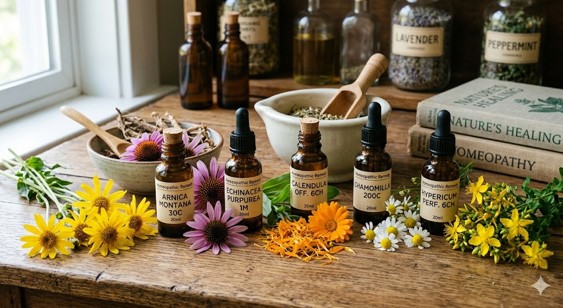
If you have ever picked up a small vial containing homeopathic pellets and thought to yourself ‘What the heck is in here?’! then I am glad you are asking the right question. Homeopathy is one of the world’s most widely used forms of natural (as opposed to pharmaceutical) medicine, but there is relatively little known about the scientific basis behind how homeopathic remedies are created.
In this blog, we will not only do an overview of the entire process of turning raw, natural materials into the tiny but powerful pellets that practitioners prescribe, but also explain the terms ‘dilutions’ and ‘potencies’ and what they actually mean.
Step 1: Choosing the Source Substance
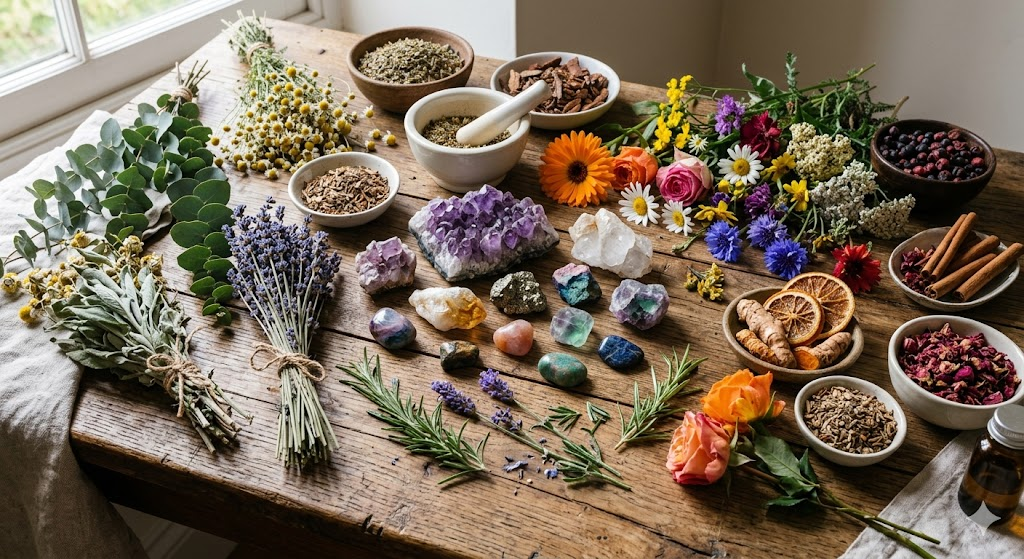
All homeopathic remedies come from some type of source material found in nature. All of these source materials fall into one of three categories:
- Plants: For example, the use of arnica montana helps alleviate bruising, chamomilla is used to relieve symptoms associated with teething and colic, belladonna reduces fever and inflammation.
- Minerals: E.g., sulphur, silica, calcarea carbonica all come from naturally occurring mineral deposits.
- Animals: E.g., apis mellifica comes from the venom of honeybees, sepia comes from the ink produced by cuttlefish, etc.
The Homeopathy Health Care principle of ‘treating like with like’ determines what substance will be selected to treat each individual case of illness, i.e., taking an appropriate remedy that causes the same type of symptoms in healthy individuals will relieve similar types of symptoms in sick people.
Step 2: Creating the Mother Tincture
To extract the active components of raw-source material, it is first dissolved in a solution of distilled water (its source material) with some type of alcohol to create what is known as a Mother Tincture. This is typically described as Ø (phi) on charts, or more formally, as a continuous phase in the solvent system used to collect Mother Tinctures for later use. To create a similar product with insoluble/solid matter – for example, minerals – another method of manufacturing is used: Trituration. In this process, raw minerals are progressively ground down using lactose (milk sugar) until they have reached a powdery consistency which allows them to be dissolved into a liquid.
The Mother Tincture is the starting point for all further dilutions — it contains the original substance at its strongest, most concentrated form.
Step 3: Dilution — The Heart of Homeopathy
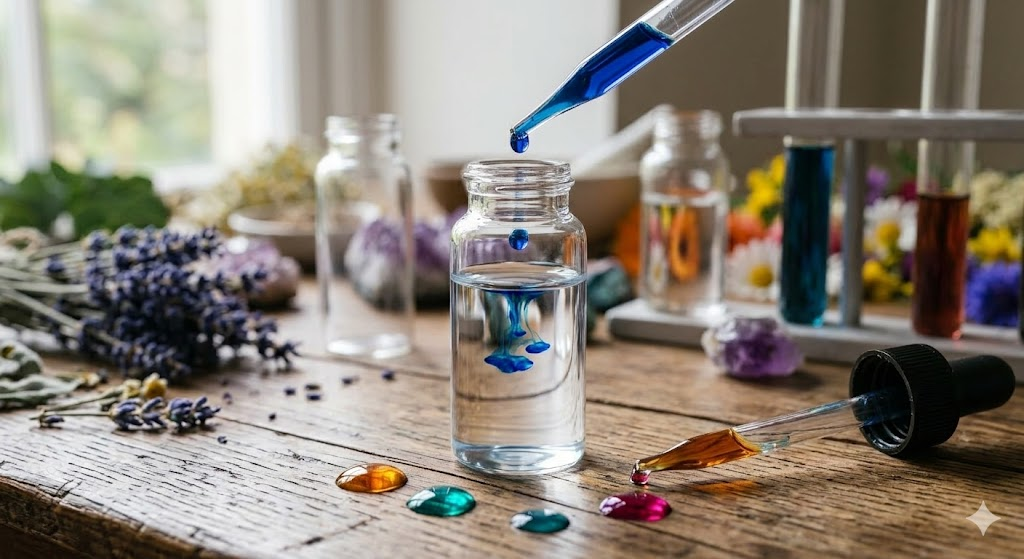
The most significant distinction between homeopathy and conventional medicine is the way remedies are dispensed. Instead of a single higher potency dose, homeopathy uses progressively more diluted doses of medicine to treat illness and is, thus, the basis of both its unique status and the primary source for current debates in science surrounding homeopathy.
In order for dilution to take place, a process called serial dilution is used. This is accomplished by:
1. Taking one part of the Mother Tincture and mixing it with nine parts or ninety-nine parts of a diluting fluid (water or a mix of water and alcohol).
2. Shaking the resulting mixture vigorously (called succussion) to activate the remedy.
3. Taking one part of the activated mixture and diluting it with fresh diluting fluid.
4. Continuing these three steps multiple times (from dozens to hundreds).
Thus each cycle of diluting and succeeding is counted as a single potency step; therefore the more potency steps that have been taken, the more powerful (not the less) the medicine will be viewed by practitioners of homeopathy.
Step 4: Understanding Potency Scales
The number and letter on a homeopathic remedy (like 6C, 30C, or 200C) tell you the scale and number of dilution steps performed. Here’s how the main scales compare:
| Scale | Dilution Ratio | Common Uses |
| X (Decimal) | 1 in 10 per step | Mild, acute conditions |
| C (Centesimal) | 1 in 100 per step | Most commonly prescribed |
| M (Millesimal) | 1 in 50,000 per step | Deep chronic conditions |
| LM / Q | 1 in 50,000 (gentle) | Sensitive patients, long-term |
A 30C remedy, the most commonly prescribed, has been diluted 1 in 100 — 30 times over. A 200C is used for deeper constitutional treatment, and 1M (1000C) is reserved for acute, high-intensity conditions under expert guidance.
Higher potency does NOT mean more of the original substance — it means more dilution steps and more succussion, which homeopaths believe increases the remedy’s energetic effect.
Step 5: Impregnating the Pellets

Once the desired potency is reached, the liquid remedy is used to impregnate small lactose (milk sugar) pellets or globules. These tiny white pellets absorb the remedy and are then dried and sealed in amber glass vials to protect them from light and moisture.
The result is the small, sweet pellets that patients place under their tongue — gentle, tasteless, and easy to administer even to children and babies.
Frequently Asked Questions
Q: If homeopathic remedies are so diluted, how can they possibly work?
A: This is the most common question — and a fair one. Homeopaths propose that water retains a ‘memory’ of the substance through the process of succussion, creating an energetic imprint that stimulates the body’s healing response. While this mechanism is still debated scientifically, decades of clinical observation and patient-reported outcomes support the effectiveness of homeopathic treatment for many conditions.
Q: What does ’30C’ mean on a homeopathic remedy bottle?
A: ‘C’ stands for Centesimal — a dilution ratio of 1 in 100. ’30C’ means this dilution-and-succussion cycle has been performed 30 times. It is one of the most commonly prescribed potencies for general use and acute conditions.
Q: Are higher potencies stronger or weaker?
A: In homeopathy, higher potencies (like 200C or 1M) are considered more powerful in their effect — not weaker. They are typically prescribed for deeper, chronic, or constitutional conditions, and always under the guidance of an experienced homeopath.
Q: Is there any alcohol in homeopathic remedies?
A: The Mother Tincture does use alcohol as a solvent. However, by the time serial dilution is complete, the alcohol content in the final remedy is negligible — typically well below 0.5%. Most pellet-form remedies are considered safe for children, pregnant women, and those avoiding alcohol.
The Craft Behind Every Remedy
Homeopathic remedy-making is a meticulous, centuries-refined process — one that transforms natural substances into precise, individualized medicines. At Homeopathy Health Care, our practitioner Anju Gupta brings 25+ years of classical homeopathy experience to every consultation, selecting not just the right remedy, but the right potency and dosing schedule for each unique patient.
Whether you’re curious about Homeopathy Health Care for the first time, or ready to begin treatment, we invite you to book a consultation and experience personalized, root-cause healing for yourself or your family.
📞 Book Your Consultation Today
In-person: Brampton · Mississauga · Toronto | Online consultations across Canada
📧 contact@homeopathyhealthcare.ca 📱 416-854-5941 🌐 www.homeopathyhealthcare.ca

Anju Gupta, B.H.M.S. is the Founder of Homeopathy Health Care and a registered homeopath with the College of Homeopaths of Ontario, bringing over 25 years of clinical experience. She is dedicated to providing personalized, holistic homeopathic care that focuses on identifying and treating the root cause of illness while promoting long-term health and overall well-being.